Why WordPress Continues to Dominate the Internet
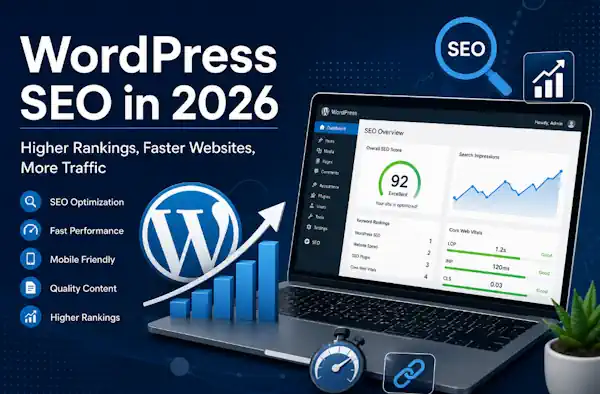
WordPress remains the most popular content management system in the world and powers millions of websites across industries including eCommerce, news publishing, blogging, education, and business websites. The reason for its success is simple: flexibility, scalability, ease of use, and a massive ecosystem of plugins and themes.
In 2026, competition on search engines is stronger than ever. Artificial intelligence, voice search, Core Web Vitals, and user experience metrics now play a larger role in rankings. Website owners are no longer competing only with local businesses or bloggers. They are competing with AI-generated content, major brands, and websites publishing thousands of articles every month.
Because of this changing landscape, understanding WordPress SEO has become one of the most searched topics online.
Website owners frequently ask questions like:
- How do I rank higher in Google?
- What are the best WordPress SEO plugins?
- How can I improve website speed?
- How do Core Web Vitals affect rankings?
- What SEO strategy works in 2026?
This guide explains everything in detail.
Understanding Modern SEO for WordPress
Search engine optimization is the process of improving your website so search engines can understand and rank your content better.
Years ago, SEO mainly involved adding keywords repeatedly into articles. That strategy no longer works effectively.
Modern SEO includes:
- High-quality content
- Website speed
- Mobile optimization
- User experience
- Technical structure
- Internal linking
- Search intent optimization
- Structured data
- Authority building
Search engines now evaluate websites based on overall quality instead of isolated factors.
Choosing the Right WordPress Hosting
SEO starts before content creation. Your hosting provider directly impacts speed and performance.
Slow servers increase page loading times, and slow loading times often reduce rankings and user satisfaction.
Important hosting features include:
- Fast SSD storage
- Global CDN support
- Server-level caching
- Security protection
- Automatic backups
- PHP optimization
- High uptime percentage
Many website owners focus only on low prices and ignore performance metrics.
A website that loads in two seconds will usually perform better than a website loading in six seconds.
Website Speed and Core Web Vitals
Speed optimization is one of the most important ranking factors today.
Google evaluates user experience using Core Web Vitals metrics:
Largest Contentful Paint
This measures how quickly the largest visible element loads.
Interaction to Next Paint
This measures responsiveness after user interaction.
Cumulative Layout Shift
This evaluates visual stability while loading.
Bad scores may affect rankings and user behavior.
Methods for improving website speed include:
- Compressing images
- Using lazy loading
- Minifying CSS files
- Reducing JavaScript
- Enabling caching
- Using content delivery networks
- Removing unnecessary plugins
Many WordPress websites become slow because site owners install excessive plugins without evaluating performance impact.
Choosing the Best SEO Plugin
WordPress provides multiple SEO plugins designed to simplify optimization.
Popular features include:
- Meta title editing
- Meta descriptions
- XML sitemap generation
- Schema implementation
- Redirect management
- Social media previews
- Keyword analysis
The ideal plugin depends on website goals and workflow preferences.
Many users make the mistake of installing several SEO plugins simultaneously.
This frequently creates conflicts and duplicate metadata issues.
Keyword Research in 2026
Keyword research remains essential, but the strategy has evolved significantly.
Instead of focusing only on broad keywords, modern websites target topic clusters and search intent.
Examples:
Traditional keyword:
“WordPress”
Better long-tail keywords:
- Best WordPress SEO strategies
- WordPress speed optimization guide
- How to improve WordPress Core Web Vitals
- WordPress SEO plugins comparison
Long-tail keywords generally provide:
- Less competition
- Higher conversion rates
- Better targeting
- More relevant visitors
Search Intent Optimization
Search engines increasingly focus on understanding why users perform searches.
Different types of intent include:
Informational Intent
Users want information.
Examples:
- What is WordPress?
- How does SEO work?
Navigational Intent
Users want a specific website.
Examples:
- WordPress login
- Google Search Console
Transactional Intent
Users intend to purchase something.
Examples:
- Buy WordPress hosting
- Premium WordPress themes
Commercial Investigation
Users compare products before buying.
Examples:
- Best WordPress page builders
- Top SEO plugins comparison
Matching content with search intent improves rankings and user engagement.
Creating High-Quality Content
Content quality remains the foundation of SEO success.
High-performing content generally includes:
- Original information
- Clear formatting
- Helpful examples
- Readable paragraphs
- Practical advice
- Visual elements
- Strong organization
Many websites fail because they publish large amounts of low-value content.
Publishing ten excellent articles often performs better than publishing one hundred weak articles.
Using Heading Structure Correctly
Headings improve readability and help search engines understand content hierarchy.
A proper structure usually follows:
H1
Main title.
H2
Main sections.
H3
Subsections.
H4
Smaller supporting topics.
Improper heading structure can create confusion for users and search engines.
Internal Linking Strategy
Internal links connect pages inside your website.
Benefits include:
- Better crawlability
- Improved navigation
- More page authority distribution
- Longer session durations
- Lower bounce rates
For example, an article about WordPress speed optimization may link to:
- Caching guides
- Hosting recommendations
- Image optimization tutorials
- SEO plugin comparisons
Strategic internal linking creates a stronger website structure.
Image Optimization
Images improve user experience but can significantly reduce performance when improperly optimized.
Recommended practices include:
- Compress images before uploading
- Use modern formats
- Add descriptive alt text
- Resize large images
- Enable lazy loading
Search engines also use image data to understand page context.
Mobile Optimization Matters More Than Ever
Most internet users now browse using mobile devices.
Google primarily evaluates mobile versions of websites.
Mobile optimization includes:
- Responsive design
- Readable text
- Fast loading speeds
- Touch-friendly buttons
- Simple navigation
A desktop-focused design can negatively impact rankings.
Structured Data and Schema Markup
Schema markup helps search engines understand website content.
Schema can create rich results such as:
- FAQ sections
- Reviews
- Recipes
- Articles
- Products
- Events
Rich snippets often improve visibility and click-through rates.
Building Website Authority
Search engines evaluate website trust and authority.
Authority can improve through:
- Quality backlinks
- Expert content
- Brand recognition
- Consistent publishing
- Positive user experience
Artificial link-building techniques and spam tactics may create long-term risks.
Natural authority development remains more sustainable.
Voice Search Optimization
Voice search continues growing because of smartphones and smart assistants.
Voice searches often differ from typed searches.
Typed search:
“best WordPress plugins”
Voice search:
“What are the best WordPress plugins for improving SEO?”
Content optimized for natural language and conversational questions can capture more traffic.
Artificial Intelligence and WordPress Content
Artificial intelligence tools have transformed content creation.
Writers now use AI for:
- Topic research
- Content ideas
- Outline generation
- Draft creation
- Optimization suggestions
However, search engines increasingly focus on value rather than content origin.
Simply generating large amounts of AI content without human expertise rarely creates long-term success.
Combining AI efficiency with human knowledge often produces better results.
Future Trends for WordPress SEO
SEO continues changing rapidly.
Several trends are shaping the future:
- AI-powered search experiences
- Personalized results
- Voice interaction growth
- User experience signals
- Entity-based search
- Advanced structured data
- Video content expansion
- Semantic search improvements
Website owners who adapt quickly often maintain stronger rankings while competitors struggle to keep pace.